Antalya Destination
Antalya,
Turkey's principal holiday resort in the Mediterranean region (ancient
Pamphylia), is an attractive city with shady palm-lined boulevards, a
prize-winning marina on the Mediterranean. In the picturesque old
quarter, Kaleici, narrow winding streets and old wooden houses abut the
ancient city walls. Lately, many foreigners have bought (and continue to
buy) property in and around Antalya for their holidays or for the
retirement. It became a popular area especially for the German and
Russian nationals. During the winter months its population is around 2
million, but in the summer times it doubles.
The region
around Antalya offers sights of astonishing natural beauty as well as
awesome historical remains. You can walk behind the cascade, a thrilling
experience, at the Upper Düden Waterfalls, 14 km northeast of Antalya.
On the way to Lara Beach, the Lower Düden Waterfalls plunge straight
into the sea. The nearby rest area offers an excellent view of the
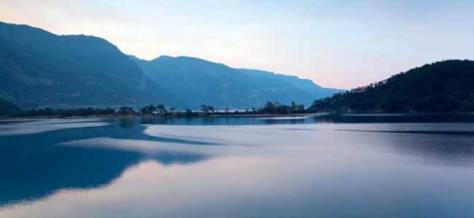
falls; the view is even more spectacular from the sea. Kursunlu
Waterfalls and Nilüfer Lake, both 18 km from Antalya are two more places
of superb natural beauty.
Ancient City
The
ancient city of Aphrodisias, dedicated to the goddess of love
Aphrodite, was a Hellenistic city which also flourished under Roman and
Byzantine rule. Excavations in the 24-meter-high (78 ft) theater hill
have revealed layers of settlement going back to the Bronze Age (c.
2800-2200 BC). It was founded in the 5th c. BC and flourished under the
Roman Empire (1st c. BC-4th c. AD). Mark Antony recognized the autonomy
of Aphrodisias in the 1st c. BC. In the Byzantine period it was first
the seat of an archbishopric, then of the metropolitan of Caria. In the
6th c. AD the name of Aphrodisias was changed to Stavropolis, the city
of the Cross, to erase the pagan goddess of love from peopleís minds. As
the capital of Caria Aphrodisias was finally called Caria which then
became Geyre in Turkish. Later in the 13th century it was abandoned. The
city was buried by a series of earthquakes.
Aphrodisias was
primarily known as a center for the arts, specifically sculpture. The
Aphrodisias School of Sculpture had a distinctive style and was very
well circulated throughout the Greek and Roman world. Statues with
corresponding signatures were discovered from Spain to present day
Germany and virtually everywhere in the Roman world. The existence of
Aphrodisias was almost forgotten until a Turkish professor, Dr. Kenan
Erim, of New York University received a grant from National Geographic
to excavate the site in the 1960ís. His archaeological work revealed a
city of vast importance.
Read more...